After four weeks of campaigning and an election day marked by high drama, Denmark has its results — but no clear majority. With turnout reaching 84%, voters have produced a highly fragmented parliament comprising 12 parties. The outgoing government has failed to convince the electorate, suffering its worst-ever results for the two main parties in the coalition.
One of the key figures in the coming negotiations will be the outgoing foreign minister, Lars Løkke Rasmussen. With his Moderates holding 14 seats, he is likely to play a decisive role in government formation, with the ability to tilt a majority either to the left or to the right.
No bloc reaches 90 seats
It has been a bruising night for the government’s two main parties. The Social Democrats, led by prime minister Mette Frederiksen, have won the election but recorded their worst result since 1903. Meanwhile, Venstre (the liberal party), the largest force on the right, has also suffered the worst result in its history.
Neither bloc has secured a majority, and for now no one can count on reaching the 90 seats required in a parliament that breaks down as follows:
Left-wing parties: 84
Right-wing parties: 77
Centre party (Moderaterne): 14

Social Democrats 38 (-12); Socialist People’s Party (SF) 20 (+5); Venstre (liberals) 18 (-5); Liberal Alliance 16 (+2); Danish People’s Party 16 (+11); Moderates (centre) 14 (-2); Conservatives 13 (+3); Red-Green Alliance (Enhedslisten) 11 (+2); Social Liberals 10 (+3); Denmark Democrats 10 (-4); The Alternative 5 (-1); and the New Right 4 (+4).
Three leaders vie to lead negotiations
Mette Frederiksen, Venstre leader Troels Lund Poulsen, and Lars Løkke Rasmussen have all signalled their intention to lead negotiations, which will be conducted through the figure of the den kongelige undersøger (“royal investigator”).
This role is central to Denmark’s government formation process in the absence of a clear majority. Following the election, the monarch convenes a kongerunde (“round of consultations”), during which party leaders indicate whom they believe should lead negotiations. Based on these recommendations, a figure — typically a political leader with relative parliamentary backing — is tasked with exploring possible majorities and steering talks to form a government.
Although not formally codified in the constitution, this has been an established political practice since the 1960s. The royal investigator effectively acts as chief negotiator until a viable candidate for prime minister emerges who does not face a parliamentary majority against them.
Denmark’s well-known institutional efficiency usually extends to government formation, but this time the process may prove more complex. The outgoing government holds the current record, having taken 42 days to form amid an unusually broad coalition. The previous record dated back to 1975, when it took 35 days. The royal consultations begin today, and the clock is now ticking.
The North Atlantic seats
In such a fragmented parliament, the four North Atlantic seats — from the Faroe Islands and Greenland — can become highly influential despite their limited number. Over the past 25 years, the left bloc has traditionally been able to rely on three or four of these seats, but that may not be the case this time. Attention now turns to how the four North Atlantic MPs will position themselves.
From Greenland, the elected representatives will be Qarsoq Høegh-Dam of the pro-independence protest party Naleraq and Naaja H. Nathanielsen, a naalakkersuisoq (minister) from the left-wing pro-independence party Inuit Ataqatigiit (IA). While IA won the largest share of the vote, Høegh-Dam emerged as the top individual vote-getter.
This result will also have consequences for Greenland’s government, the Naalakkersuisut, as IA will need to appoint a new minister for trade, raw materials, energy, justice and equality — a portfolio previously held by Nathanielsen. Neither MP has yet indicated whom they would support as Denmark’s next prime minister.
In the Faroe Islands, the social democrat Sjúrður Skaale (Javnaðarflokkurin) and the unionist Anna Falkenberg (Sambandsflokkurin) have both retained their seats, each securing strong results and record personal votes.
Another vote in the Faroe Islands
Voters in the Faroe Islands will return to the polls on 26 March for elections to the Løgting, the Faroese parliament. Recent polling suggests a victory for the right-wing opposition parties, projected to win 19 seats, compared with 14 for the current governing coalition.
According to these polls, a coalition between the unionist party and the People’s Party could secure a majority with 17 seats. The outcome will not only shape Faroese politics but may also influence the islands’ national aspirations and the broader sovereignty debate in the North Atlantic.
https://www.nationalia.info/brief/11753/no-clear-majority-in-denmark
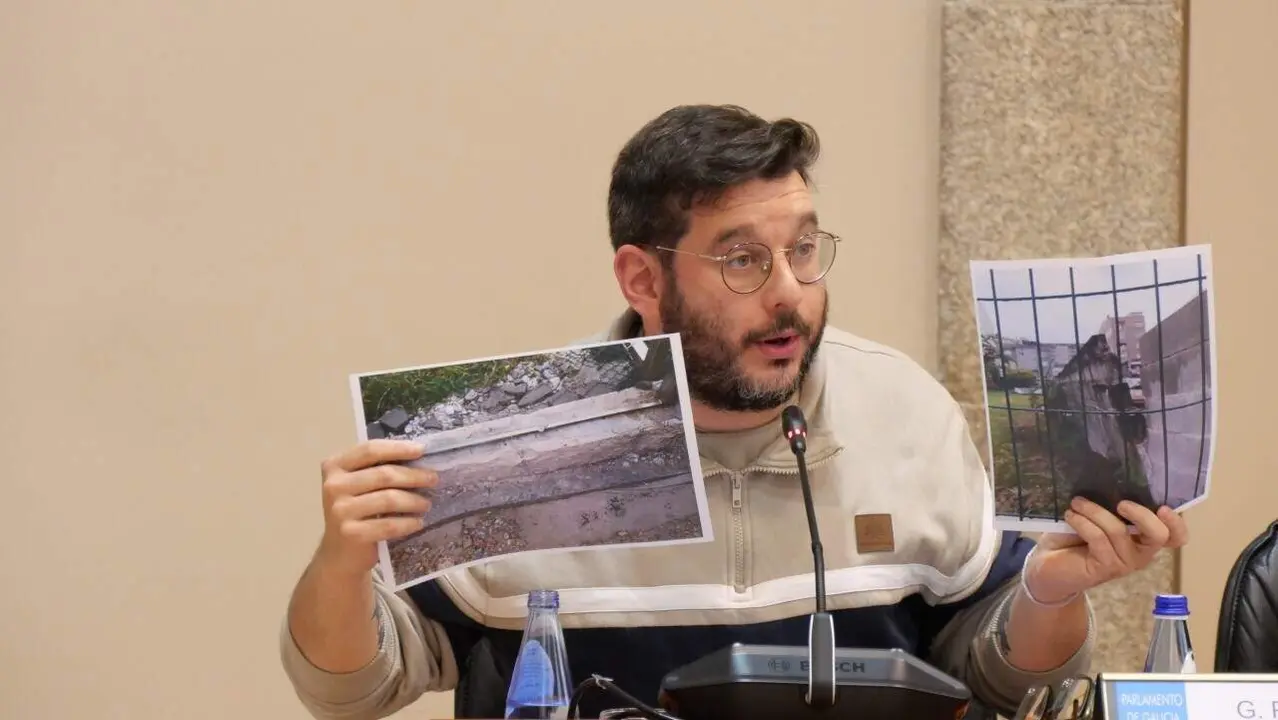
Paulo Ríos: “Se pretende que sexa o BNG quen lle resolva a papeleta , entón debería dimitir tanto a alcaldesa de Marín como o Goberno galego”
read more..Jorge Pueyo, presidente de CHA: “La nueva Ejecutiva, formada por 18 personas, aúna juventud y experiencia, y conoce a la perfección el territorio, la situación de Aragón y la realidad de Chunta Aragonesista”.
read more..Néstor Rego sinala que as unidades móbiles non poden servir para continuar a desmantelar servizos nin o fechamento ou substitución dos centros existentes
Reforzar o cadro de persoal sanitario e administrativo, a comezar por cubrir as vacantes, e dotar os centros de medios necesarios: medidas que defende o BNG
read more..Néstor Rego traslada o pesar e a solidariedade do BNG ás vítimas e familiares dos accidentes de Adamuz e Gelida: “non pode acontecer o que ocorreu en Angrois”
“Resulta inaceptábel actuacións como a suspensión dos servizos ferroviarios no Eixo Atlántico sen aviso e sen alternativa de transporte” denuncia Rego ante Sánchez
A organización nacionalista demanda actuacións de mantemento, mellora e modernización da rede ferroviaria
Rego pide a Sánchez “levantar a voz para defender a legalidade internacional e o respecto á soberanía dos pobos” para reclamar o fin do bloqueo en Cuba e unha Palestina e un Sáhara libres
read more..L’utilisation récente de l’image d’un bagad breton par le Rassemblement National, sans l’accord des personnes concernées, a ravivé un débat essentiel : celui de l’appropriation opportuniste de la culture bretonne par un parti qui n’en défend ni la réalité, ni les fondements, ni l’avenir.
read more..Skal vinnan fáa betri marknaðaratgongd krevst, at vit sleppa at samráðast, sum sjálvstøðugt land. Vinnan kappast í dag á ójøvnum føti, tí vit ikki hava neyðugu fríhandilsavtalurnar, og sleppa ikki framat samráðingarborðinum.
read more..Jordi Salvador, diputat d’Esquerra Republicana
La regularització de persones migrades és una mesura imprescindible. No només per raons democràtiques, sinó sobretot humanitàries i econòmiques. Aquesta setmana, amb l’aprovació per part del govern espanyol del Reial Decret que permetrà la regularització de més de 500.000 persones, es fa un pas que feia massa temps que es reclamava.
In de plenaire vergadering van de Kamerwerd de kaderwet gezondheidszorg besproken. Eén van de heikele punten is de mogelijkheid het RIZIV-nummer van zorgverstrekkers te schorsen of zelfs definitief af te pakken.“Een zeer zware sanctie, die door goedmenende zorgverleners ervaren wordt als een heksenjacht”, zegt Vlaams Belang-Kamerlid Dominiek Sneppe.“Hiermee breiden de controle- en sanctiebevoegdheden van het RIZIV verder uit, maar wie controleert het RIZIV?Het antwoord van minister van Volksgezondheid Frank Vandenbroucke(Vooruit) was veelzeggend: stilte.”
read more..