
Wales votes in a contest framed as “humanity or indifference, Plaid or Reform”
The leader of Wales’s pro-independence party – which could top the poll for the first time in its history – has cast May’s election as a stark, binary choice. Greens, Labour and the Conservatives, however, have yet to say their final word
Plaid leader Rhun ap Iorwerth. Author: Plaid Cymru
With just two months to go before voters head to the Senedd, Plaid Cymru has staked its strategy on portraying the campaign as an almost epic struggle between “tolerance or division, progress or decline, culture or ignorance, humanity or indifference” – embodied, respectively, by Plaid itself and Reform UK, the hard-right party led by Nigel Farage.
That was the framing set out this weekend by Plaid’s leader, Rhun ap Iorwerth, at the party’s conference in Newport. Polling appears to sustain the narrative of a two-horse race: Plaid and Reform are each on 30% of voting intentions, while other parties struggle to break into double digits.
If borne out at the ballot box, such projections would amount to a historic political earthquake in a Welsh system that has been relatively stable since the first devolved elections in 1999:
- Welsh Labour has always finished first and has led every Welsh government.
- Plaid Cymru has never surpassed 30% of the vote and, when in government, has done so as Labour’s junior partner.
- To the right of the Conservative Party, parties have played little to no role.
At the last Senedd election, in 2021, Labour fell just short of an outright majority, while Plaid was overtaken by the Conservatives in both votes and seats.
Seats obtained at the Welsh Parliament election, May 2021
The Labour Party formed a single-party government after the elections, with the Conservatives serving as the leaders of the opposition. Plaid Cymru maintained a cooperation agreement with Labour until May 2024.
Polling at the start of 2026 points to a markedly different landscape. A Labour party in crisis – not only in Wales but across the UK – would cede leadership of the left to Plaid and, perhaps, even second place to the Green Party of England and Wales, which last week defeated Labour in a Manchester by-election for a seat in the UK parliament. On the right, Reform would emerge as the dominant force, taking more than twice as many votes as the Conservatives.
Vote percentage prediction. May 2026 election
Polls published since the beginning of the year predict a Plaid victory, but they do not rule out the possibility that Reform could be the most voted party. The higher combined vote share of the left places Plaid, a priori, as the clear favourite to lead the Welsh government.

Plaid Cymru: moderation and contrast as a path to victory
Plaid Cymru is an independence party positioned to the left of Labour on socio-economic policy. Yet it has entered the 7 May contest with calculated moderation. Party strategists appear mindful that they should avoid proposals voters might deem too radical, while knowing that even a relatively cautious platform on national and social questions will stand in sharp contrast to Reform’s reactionary pitch.
On its website, Plaid sets out pledges for its first 100 days in office, should it be able to form a government. The emphasis is on centre-left social policy, including:
- improving the quality of care within the NHS in Wales;
- raising standards across the education system;
- creating a new body, Unnos, to implement an affordable housing strategy.
On constitutional relations with Westminster, there is no mention of independence in the immediate programme. While Plaid continues to advocate full sovereignty as its long-term objective, it has placed that goal beyond the scope of a first term and instead prioritises a gradual expansion of devolved powers.
The party promises a “reset”, centred on three key measures:
- Continuing to press London to transfer further powers to Cardiff, bringing Welsh self-government into line with Scotland’s;
- opening talks with the UK government to define a new funding model that allocates resources according to Wales’s needs rather than population share;
- establishing a National Commission to launch a “national conversation” on Wales’s next steps in its relationship with the United Kingdom.
As might be expected, Reform UK portrays Plaid as “left-wing extremists” intent on dragging Wales out of the UK. Though Reform has yet to publish its manifesto, Reform Senedd member James Evans has made clear that his party wants “no more devolution, no more powers”.
And the rest?
There is little to suggest that any party will govern alone if the polls prove accurate. A crucial variable will be the performance of the Green Party in England and Wales, which is experiencing exponential growth across the UK, having tripled its membership in six months to 200,000.
Since 2020, the Greens have backed Welsh self-determination, although they remain organisationally tied to their English counterparts, reflecting their non-nationalist roots. The party could win its first-ever seats in the Senedd and become pivotal to the formation of a left-leaning administration. Given Plaid and the Greens’ record of cooperation at local level and their proximity on both national and social questions, a post-election pact would be plausible.
Labour’s role in a deal is harder to predict, though not inconceivable. The obstacle may be less ideological – Labour and Plaid have governed together before – than psychological: a historic slump could sap the party’s appetite for office. A more likely scenario might be an explicit or tacit understanding among left-of-centre parties around a non-confrontational programme. The Labour first minister, Eluned Morgan, has not ruled this out “if needs must”, and has indicated support for seeking additional powers from Westminster.
For the right, the path to government looks steeper. It would likely require a clear-cut Reform victory coupled with an agreement with the Conservative Party. Yet the Tories would face an acutely uncomfortable and risky dilemma: propping up the very party that is cannibalising their support not only in Wales but across the United Kingdom.
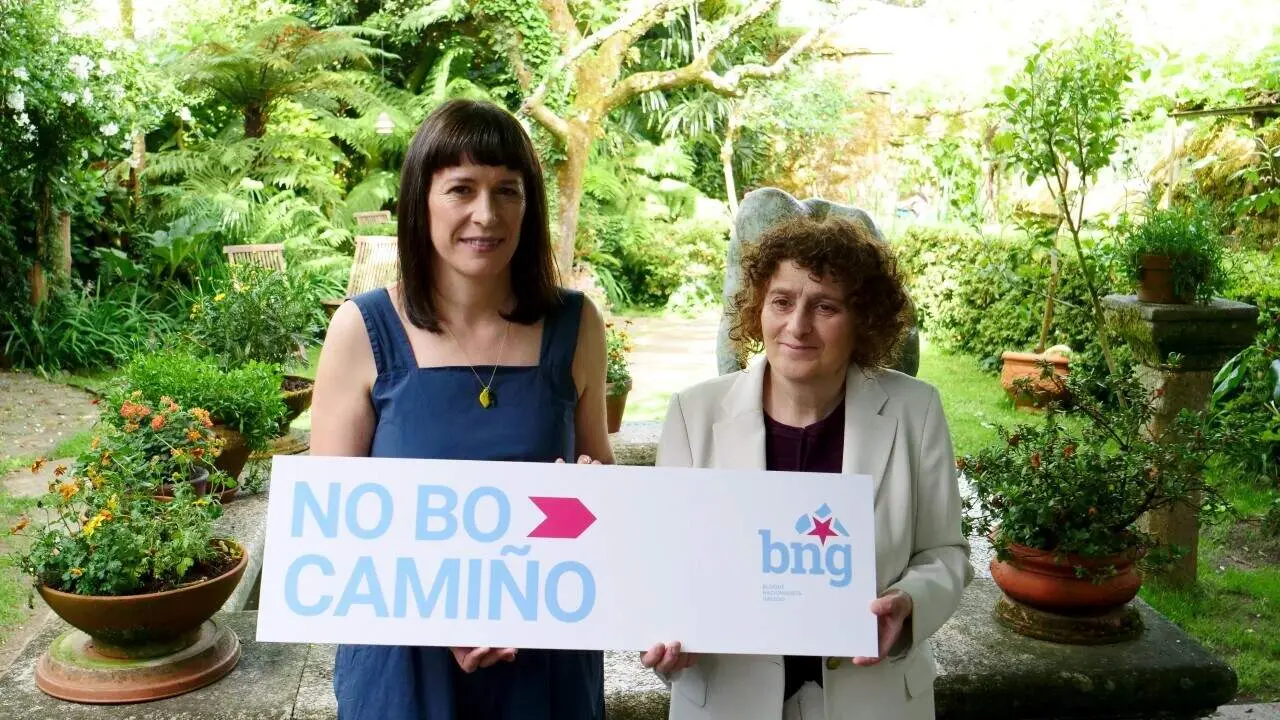
“A cidade avanza pese a unha oposición destrutiva, desleal e AntiSantiago”
“Compostela non necesita bandazos, nin volver atrás, senón a estabilidade que ofrece o BNG”
read more..Dlouholetá starostka Pasohlávek Martina Dominová, zvolená za stranu Moravané, jednala se senátorem Robertem Šlachtou o záchraně nejstaršího románského kostela na Moravě v Mušově. Pokračuje tak v iniciativě, kterou před několika založil člen předsednictva strany Moravané Tomáš Ingr.
read more..Es darf nicht sein, dass die Zugehörigkeit zu einer nationalen Minderheit in Schleswig-Holstein noch immer darüber entscheidet, ob man eine gute Ausbildung bekommt oder ob man diskriminierungsfrei leben kann. Hier haben wir als Land eine Verantwortung den Sinti und Roma gegenüber, der wir endlich umfassend nachkommen müssen.
read more..Izjava predsednika Saveza vojvođanskih Mađara Balinta Pastora da studenti i ostali učesnici protesta u Srbiji deluju „protivno zakonu“, samo je još jedna zarađena dnevnica ovog politikanta od svog mentora Aleksandra Vučića.
read more..Auf eine arbeitslos gemeldete Pflegekraft kommen in Flensburg fast vier offene Stellen. Das zeigt die Antwort der Landesregierung auf eine Kleine Anfrage des SSW zur Pflegeversorgung in der Stadt Flensburg (Drucksache 20/3936).
read more..Met de aankondiging van het officiële supporterslied kunnen de Belgische fans beginnen aftellen naar de eerste wedstrijd van de Rode Duivels op het WK. Wie minder enthousiast wordt van het WK-lied, is de Vlaamse Volksbeweging. Zij vinden het niet kunnen dat het nummer geen Nederlands bevat.
read more..Liz Saville Roberts MP urges the UK Government to implement measures that would target higher costs of living for people in Wales.
Today (Thursday 21 May) Plaid Cymru Westminster Group leader, Liz Saville Roberts MP, said that while the UK Government’s cost-of-living measures announced by the Chancellor of the Exchequer, Rachel Reeves are welcome, they do not adequately consider the higher costs faced by Welsh households which require targeted intervention.
read more..ANDALUCISTAS SE MOVILIZA POR UNA SANIDAD PÚBLICA “QUE FUNCIONE DE VERDAD”
Christopher Rivas participa en la manifestación de Sevilla y reclama el fin de las listas de espera y el refuerzo real del sistema sanitario público
read more..Italiensierung von Ortsnamen sogar in deutscher Sprachausgabe auf olympics.com
BOZEN – Mit großem Befremden reagiert der Südtiroler Schützenbund auf die Darstellung Südtiroler Ortsnamen auf der offiziellen Olympia-Website olympics.com. Dort wird das Südtiroler Biathlonzentrum im Antholzertal selbst in der deutschen Sprachausgabe als „Anterselva“ bzw. „Anterselva Biathlon Arena“ bezeichnet – eine Praxis, die bislang vor allem aus italienisch-nationalen Kreisen bekannt war.
read more..